
Payoneer built its name on cross-border payments, and for a long time it was the default pick among alternatives to Payoneer for small business owners who hadn’t yet found better options. But if you run a small business and you’ve hit a wall with frozen balances, unpredictable fees, or support tickets that go nowhere, you’re probably already looking for alternatives to Payoneer for small business owners who need something more reliable. This guide breaks down six solid options, what each one does well, and who should actually switch.
We pulled together everything you need to compare pricing, currency support, and card features side by side, so you don’t have to open six tabs and read fine print for an hour. By the end, you’ll know exactly which alternative to Payoneer for small business use fits you best, whether you’re a freelancer collecting payments from three countries or a small business paying suppliers every week.
This isn’t just a rundown of alternatives to Payoneer for small business for the sake of it. Every provider here got picked because it solves a specific problem that Payoneer handles badly, whether that’s currency conversion costs, card access, or plain old customer support. If you’ve already searched “alternatives to Payoneer” a few times this month, you’re in the right place, and we’ll walk through exactly why each option earned its spot on this list of the best alternatives to Payoneer for small business owners.
Why Look Beyond Payoneer?
Payoneer works fine for basic cross-border transfers, and it’s still a common choice among freelancers on platforms like Fiverr and Upwork. It supports 70+ currencies, offers local receiving accounts, and handles mass payouts for marketplaces. That’s genuinely useful if your needs are simple.
The trouble starts once your business grows past the basics. Review sites like G2, Capterra, and Trustpilot are full of complaints about frozen balances (some users report five-figure sums locked with little explanation), fees that quietly climb as transaction volume increases, and verification processes that feel more like an interrogation than a signup. One Trustpilot reviewer said they felt treated like a criminal just trying to confirm their identity. When your cash flow depends on a platform, that kind of unpredictability is a real problem, not a minor annoyance.
That’s exactly why so many small business owners start searching for alternatives to Payoneer for small business use. The good news is there are now several mature options that handle FX, local receiving accounts, and card issuance better than Payoneer does, often with lower and more transparent fees.
It’s also worth saying that Payoneer isn’t a bad company, it’s just built around a specific model that doesn’t scale well for every kind of business. The percentage fees that feel small on a $200 payment turn into real money once you’re processing tens of thousands of dollars a month. That’s the exact moment most business owners start comparing alternatives to Payoneer for small business operations that need predictable, lower-cost international payments instead of fees that grow along with revenue.
What to Look for in Alternatives to Payoneer for Small Business
Before you pick from the list of alternatives to Payoneer for small business below, it helps to know what actually matters:
- Currency coverage and local receiving accounts. Can you receive USD, GBP, or EUR like a local, or are you stuck converting everything through SWIFT?
- FX transparency. Look for providers that publish their markup clearly instead of burying it in the exchange rate.
- Transfer speed. Local payment rails move money faster and cheaper than traditional wire transfers.
- Card options. A debit or corporate card tied to your account balance saves you from a separate business banking relationship.
- Support quality. When a payment is stuck and your vendor is waiting, a chatbot doesn’t cut it.
- Integrations. Connections to Xero, QuickBooks, Shopify, or Amazon save hours of manual reconciliation every month.
Keep these in mind as you go through the list of alternatives to Payoneer for small business, because the best alternatives to Payoneer for small business aren’t interchangeable. Each one leans toward a different type of business.
Alternatives to Payoneer for Freelancers vs. Small Business vs. Startups
Not every alternative to Payoneer for small business fits every situation. If you’re a solo freelancer, you probably want low fees and simple currency conversion without a monthly subscription. Alternatives to Payoneer for freelancers like Wise or Skrill tend to fit that bill since they charge per transaction rather than locking you into a plan. Someone hunting for alternatives to Payoneer for freelancers usually cares more about fast signup and low FX markup than corporate card controls, and that’s exactly where these two platforms shine.
If you’re further along and running an actual small business with employees or suppliers, you’ll want stronger card controls, multi-user access, and maybe a line of credit. Payoneer Alternatives For Startups, like Mercury, lean into that space with treasury tools and venture-friendly banking built around a formed US entity. Founders comparing Payoneer alternatives for startups tend to prioritize things Payoneer never offered in the first place, like idle-cash yield and access to venture debt.
And if your business already operates across several countries with real volume, Payoneer alternatives global business options like Airwallex and Revolut Business, offer the FX tools and local rails that make high-volume international operations cheaper to run. These same platforms also count among the best Payoneer alternatives for global payments, since they settle transactions locally instead of routing everything through the slower, pricier SWIFT network. If your day-to-day work involves paying overseas manufacturers, contractors, or suppliers every week, Payoneer alternatives for cross-border payments matter a lot more than a flashy app, and that’s where local receiving accounts and transparent FX pricing really earn their keep.
Put simply, the right pick among Payoneer alternatives for global business depends on volume and complexity, not just currency count. A freelancer moving $2,000 a month has very different needs than a business processing $200,000 across a dozen countries, and the providers below split fairly cleanly along that line.
The top 6 Best Alternatives to Payoneer for Small Business in 2026
Here’s a closer look at six of the best alternatives to Payoneer for small business owners, freelancers, and growing companies with international customers or suppliers. They are picked specifically for how well they replace Payoneer day to day. Each of these alternatives to Payoneer for small business made the list for a specific reason, not just because it’s a well-known name.
Wise Business
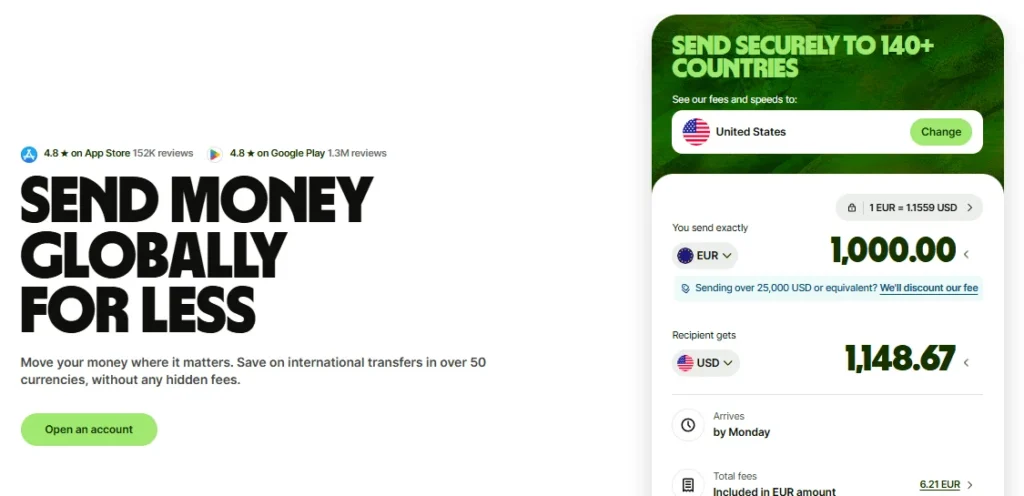
Wise, formerly known as TransferWise, is one of the most recognized names among alternatives to Payoneer for small business, and it’s often the first name that comes up when people search for alternatives to Payoneer for small business owners who care about transparent pricing. The platform lets you hold 40+ currencies and gives you local account details in nine of them, including USD, GBP, and EUR, so you can get paid like a local business instead of losing money to forced conversions. Wise multi-currency accounts are especially popular with freelancers and small e-commerce sellers who want predictable costs without a monthly subscription.
Wise always uses the mid-market rate as its base, then adds a small, clearly stated fee, usually between 0.4% and 1.6% depending on the currency pair. It integrates with Xero, QuickBooks, and Sage, and issues a business debit card for team spending tied directly to your account balance. The trade-off shows up once your transfers pass roughly €100,000 a year, since per-transaction fees start to add up, and Wise doesn’t offer FX risk management tools like forward contracts for businesses that need to lock in a rate months ahead.
Pros:
- Mid-market exchange rate with a small, transparent fee
- Local account details in nine major currencies
- Strong accounting software integrations
Cons:
- No forward contracts or FX risk management tools
- Costs add up for very high transaction volumes
Wise is a strong pick if you want one of the simplest alternatives to Payoneer for small business owners who value clear pricing over extra features.
Airwallex

Airwallex has become one of the most complete alternatives to Payoneer for small business owners running a global operation, combining multi-currency accounts, a payment gateway, and corporate cards in a single platform. You can open Global Accounts in 20+ currencies and collect payments locally in 60+ markets, which makes it a genuinely strong option for e-commerce brands and startups that sell internationally and want to avoid traditional SWIFT fees. With around 93% of transactions settling the same day, Airwallex moves money faster than most legacy banking options.
The pricing structure works in your favor too. Local transfers are often free, SWIFT transfers run about $15 to $25, and currency conversion sits around 0.5% above the interbank rate for major currencies. Airwallex also connects with Xero, QuickBooks, and NetSuite, and its corporate cards come with cashback on eligible spend and zero fees when you spend from a matching currency balance. The catch is the onboarding process, which involves fairly strict compliance checks and can take a few days to clear, so it’s not the fastest option if you need an account open today.
Pros:
- Zero-fee domestic transfers across 120+ countries
- Fast settlement, with most transactions clearing same-day
- Strong accounting and e-commerce integrations
Cons:
- Compliance checks during onboarding can take several days
- Some features are locked behind higher-tier plans
Airwallex earns its spot among the best alternatives to Payoneer for small business owners who need serious international payment infrastructure without the SWIFT fees.
Skrill Wallet

Skrill is a digital wallet that’s been around for a while, and it remains one of the more accessible alternatives to Payoneer for freelancers and small business owners who want to get started fast. You can open an account with little more than an email address, hold balances in 40+ currencies, and use prepaid or virtual cards to spend directly from your wallet. It’s especially popular in industries that sometimes struggle to get approved by more traditional platforms, since Skrill tends to be more lenient during onboarding.
That accessibility comes at a real cost, though. Currency conversion markups can run up to 3.99%, funding your account with a credit card adds close to 3% more, and withdrawing to a bank account costs around $5.50 per transaction. There’s also an inactivity fee if you don’t use the account for a few months. Skrill works well for occasional international payments or as a backup option, but it’s rarely the cheapest choice if you’re moving significant volume every month.
Pros:
- Fast signup with minimal verification requirements
- Wide currency support and instant Skrill-to-Skrill transfers
- Accepted by many high-risk and specialized industries
Cons:
- High FX markup compared to other alternatives to Payoneer for small business
- Withdrawal and funding fees add up quickly
Skrill is worth considering among alternatives to Payoneer for small business owners if speed and accessibility matter more to you than getting the absolute lowest fees.
PayPal Business

Among the alternatives to Payoneer for small business covered here, PayPal Business is the one platform almost everyone already recognizes, and that brand trust is genuinely valuable at checkout. Customers are used to seeing the PayPal logo, which can reduce cart abandonment for online sellers. The platform supports 25+ currencies, integrates easily with Shopify, eBay, and most website builders, and lets you send invoices or payment links in a few clicks. For businesses focused on consumer sales rather than paying overseas vendors, that familiarity carries real weight.
Where PayPal falls short is cost. Domestic transactions run about 2.99% plus a fixed fee, cross-border payments add another 1.5% on top of that, and currency conversion carries a markup of roughly 3% to 4% above the mid-market rate. Account holds and freezes are also a common complaint, which can be stressful if a large portion of your revenue moves through the platform. It’s less suited to businesses that primarily need to pay suppliers or contractors abroad, since the fees there stack up fast.
Pros:
- Nearly universal brand recognition and buyer trust
- Easy integration with almost any e-commerce platform
- Simple invoicing and payment link tools
Cons:
- High fees on cross-border transactions and conversions
- FX markups are well above mid-market rate
PayPal Business makes sense as a checkout option, even if it’s rarely the best of the alternatives to Payoneer for small business owners handling cross-border vendor payments.
Mercury

Mercury is built specifically for startups, particularly US-based, venture-backed companies that want a modern banking experience without the overhead of a traditional bank, making it one of the more focused alternatives to Payoneer for small business founders. It offers business checking with no monthly maintenance fees, instant virtual debit cards, and built-in treasury tools that let idle cash earn a yield instead of sitting flat. For founders comparing Payoneer alternatives for startups, Mercury often comes up because it replaces both a bank account and a chunk of your finance stack in one product.
Mercury also offers venture debt options for qualifying companies, something you won’t find in most Payoneer alternatives for startups or standard payment platforms. The interface is clean, the support team understands startup finance specifically, and the treasury features can genuinely add up if you’re sitting on a meaningful cash reserve. The catch is eligibility: you need a formed US entity to open an account, which rules out founders operating entirely outside the United States, and Mercury isn’t really designed for straightforward cross-border vendor payments the way Wise or Airwallex are.
Pros:
- No monthly fees and instant virtual debit cards
- Built-in treasury tools for idle cash
- Access to venture debt for qualifying startups
Cons:
- Requires a US business entity to open an account
- Not built for frequent cross-border payouts
Mercury stands out among Payoneer alternatives for startups that want US banking and treasury management bundled together.
Revolut Business
Revolut Business has grown from a personal finance app into a genuinely capable business platform, and it’s a common name on any list of the best alternatives to Payoneer for small business owners expanding into the UK or Europe. You can manage 25+ currencies, get local account details in GBP, USD, and EUR, and issue physical or virtual corporate cards with real-time spending controls for your team. The mobile app is polished, and features like expense categorization and instant notifications make day-to-day money management genuinely easier, which is part of why Revolut shows up on almost every list of alternatives to Payoneer for small business teams in Europe.
Pricing runs on a tiered subscription model, starting around €10 a month for the Basic plan and scaling up to custom Enterprise pricing. Each tier comes with a monthly allowance for currency exchange at the interbank rate, and once you go over that limit, or trade outside market hours, a markup of roughly 0.6% to 1% kicks in. The downside is that dedicated account support is mostly reserved for the Enterprise tier, so smaller businesses are left with in-app chat for anything urgent, and weekend FX rates can catch you off guard if you’re not paying attention.
Pros:
- Strong corporate card and expense management tools
- Competitive interbank rates within your monthly allowance
- Clean, mobile-first user experience
Cons:
- Dedicated support is limited to higher-tier plans
- Weekend and off-market FX carries extra markup
Revolut Business is a solid pick among alternatives to Payoneer for small business owners who want a modern, feature-rich platform and don’t mind working within a tiered plan.
Comparing the Best Alternatives to Payoneer for Small Business
| Provider | Currencies | Typical FX Fee | Local Transfers | Best For |
|---|---|---|---|---|
| Wise Business | 40+ | 0.4% – 1.6% | Yes, 9 currencies | Transparent, low-fee freelancers |
| Airwallex | 20+ | ~0.5% above interbank | Yes, 60+ markets | Global e-commerce and startups |
| Skrill | 40+ | Up to 3.99% | Wallet-based | Fast signup, occasional transfers |
| PayPal Business | 25+ | 3% – 4% above mid-market | Domestic only | Consumer checkout trust |
| Mercury | USD-focused | Varies | US domestic | US startups and founders |
| Revolut Business | 25+ | 0.6% – 1.0% above allowance | Yes | Corporate cards and expense tools |
This table should give you a fast way to compare the best alternatives to Payoneer for small business without digging through six separate pricing pages.
Payoneer Alternatives for Global Payments and Cross-Border Payments
If your business ships product internationally or pays a network of overseas contractors, the FX tools matter more than anything else on this list. Payoneer alternatives for global payments like Airwallex and Wise settle transactions through local rails in dozens of countries, which cuts out the multi-day delays and stacked fees that come with routing everything through SWIFT. That single change is often the biggest reason businesses go looking for Payoneer alternatives for global payments in the first place.
The same logic applies to Payoneer alternatives for cross-border payments more broadly. Whether you’re paying a manufacturer in Vietnam or a design contractor in Portugal, the provider you choose should give you a local receiving account, a clear FX markup, and a way to track the payment from start to finish. Airwallex and Revolut Business both handle Payoneer alternatives for cross-border payments well because they combine local rails with real-time tracking, so you’re not left guessing whether a wire actually landed.
For businesses that operate across multiple regions at once, it’s also worth thinking about Payoneer alternatives global business use cases and Payoneer alternatives for global business more broadly, since collecting revenue in one currency while paying suppliers in another creates its own reconciliation headache. Platforms with strong multi-currency support solve that by letting you hold balances instead of converting on every single transaction.
Free Alternatives to Payoneer
If your priority is avoiding subscription costs altogether, there are genuinely free alternatives to Payoneer worth considering. Wise, Airwallex, and Skrill all let you open an account with no monthly fee and no minimum balance requirement, so you only pay when you actually move money. PayPal Business also has no account or subscription fee, though its per-transaction costs run higher than the others, so “free” doesn’t always mean cheapest.
Revolut’s free Basic tier technically counts among the free alternatives to Payoneer too, though the monthly allowance for fee-free currency exchange is fairly limited, so heavier users will end up paying for a higher plan eventually. If you’re a freelancer or small business just getting started internationally, starting with a genuinely free option like Wise or Airwallex lets you test the waters before committing to anything with a monthly cost attached.
Here’s the thing to keep in mind with any free alternatives to Payoneer: “no monthly fee” doesn’t mean “no fee at all.” You’ll still pay something on currency conversion or a wire transfer, it’s just not a recurring charge sitting on your account whether you use it or not. For most small businesses and freelancers, that per-transaction model is actually the better deal, since you’re not paying for a subscription during slow months. When you’re comparing free alternatives to Payoneer side by side, look at the actual transaction fee you’d pay on a typical payment, not just the headline “$0/month” banner on the pricing page.
Alternatives to Payoneer 2026: What’s Changed
A few things have shifted the landscape heading into alternatives to Payoneer 2026 discussions. Payoneer’s pending acquisition by Nuvei has made some long-time users nervous about future pricing and account stability, which is pushing more businesses to explore other options now rather than waiting. At the same time, providers like Airwallex have expanded their local payment rail coverage significantly, cutting SWIFT fees out of the picture in over 120 countries.
There’s also a growing category worth watching: platforms built around stablecoins that let businesses hold USD-pegged balances and settle international payouts almost instantly, without traditional wire fees. Regulatory requirements around these tools are stricter, but for digitally native businesses, they’re becoming a real consideration alongside the more established alternatives to Payoneer for small business covered in this guide.
Anyone researching alternatives to Payoneer 2026 should also factor in projected growth in cross-border B2B payments generally. Analysts expect billions of new cross-border transactions by the end of the decade, and that growth is exactly why competition among alternatives to Payoneer for small business has picked up so much lately. More competition tends to mean better rates and fewer of the frozen-balance horror stories that pushed people away from Payoneer in the first place. If you’re reading this in 2026 and still on Payoneer purely out of habit, it’s a good time to actually run the numbers on one of the alternatives to Payoneer 2026 has to offer.
Alternatives to Payoneer for Freelancers Who Want More Than a Payoneer Banking App
If most of your income comes through freelance platforms like Fiverr or Upwork, you might already have the Payoneer banking app installed and assume it’s your only option among alternatives to Payoneer for small business use. It isn’t. Freelancers who want lower FX markups and don’t need mass payout tools built for marketplaces often do better with Wise or Skrill, both of which charge less to move money internationally and don’t require you to wait on a marketplace integration to get paid.
If you’re also managing a small team or scaling past solo freelance work, it’s worth looking at online banks for small business that combine payments with actual business banking features like multi-user access and bill pay approvals. And if you’re specifically comparing platforms built with independent contractors in mind, an online bank account for freelancers often bundles tax tools and invoicing that a pure payment platform like Payoneer simply doesn’t offer.
Quick Recap: Choosing the Right Alternative to Payoneer for Small Business
With six solid alternatives to Payoneer for small business on the table, it helps to boil the choice down to a simple rule of thumb. If low fees and clean pricing matter most, Wise is usually the right alternative to Payoneer for small business owners who move money often but don’t need extra frills. If you’re scaling internationally and want everything from payments to cards in one place, Airwallex is the strongest of the alternatives to Payoneer for small business use at real volume.
For freelancers who just want a fast, no-fuss wallet, Skrill or Wise both beat Payoneer on cost. For US startups, Mercury is the clear choice among alternatives to Payoneer for small business founders who also need banking and treasury tools built into their day-to-day account. And if brand recognition at checkout is your top priority, PayPal Business still has a role to play, even if it’s not the cheapest of the alternatives to Payoneer for small business owners paying overseas vendors.
There isn’t a universal winner here, and that’s the point. The best alternatives to Payoneer for small business owners are the ones that match how your money actually moves, not the ones with the flashiest marketing page. Take twenty minutes, map out your actual monthly payment volume and currencies, and pick the alternative to Payoneer for small business that fits that reality instead of guessing at which of the alternatives to Payoneer for small business looks best on paper.
Alternatives to Payoneer for Small Business FAQs
What can I use instead of Payoneer?
Wise, Airwallex, Revolut Business, PayPal Business, Mercury, and Skrill all work as solid alternatives to Payoneer for small business, depending on your needs. Freelancers usually do well with Wise or Skrill, while growing businesses with international suppliers often prefer Airwallex or Revolut Business for better FX tools and local receiving accounts.
Is Airwallex better than Payoneer?
For most small businesses handling frequent cross-border payments, yes. Airwallex offers zero-fee domestic transfers in over 120 countries, faster settlement times, and clearer FX pricing than Payoneer. Payoneer still has an edge for simple marketplace payouts, but Airwallex generally wins on cost and speed for broader business use.
Why is Airwallex so popular?
Airwallex combines multi-currency accounts, a payment gateway, and corporate cards into one platform, which removes the need for separate banking and payment tools. Its local payment rails cut out expensive SWIFT fees, and same-day settlement on most transactions makes it feel faster and more predictable than legacy alternatives.
How much does Payoneer charge for $100?
It depends on how the money moves. Currency conversion carries about a 0.5% markup, so converting $100 costs roughly $0.50. If the recipient doesn’t have a Payoneer account, fees can run up to 3%, and card transactions involving conversion can add another 3.5%, so the total cost on $100 could reach $3 to $4 depending on the transaction type.
Do alternatives to Payoneer for small business charge monthly fees?
It depends on the provider. Wise, Airwallex, and Skrill charge no monthly fee and only take a cut when you move money. Revolut Business and some premium plans on other platforms charge a monthly subscription, though the higher tiers usually come with better FX allowances and support in return.
Can a small business hold multiple currencies without opening accounts abroad?
Yes. Most of the platforms in this guide let you hold and receive USD, GBP, EUR, and other major currencies through local account details, without setting up a physical bank account in each country. That’s one of the biggest advantages these alternatives to Payoneer for small business offer over traditional business banking.
Are these alternatives to Payoneer for small business actually insured?
Yes, the ones covered here operate through licensed banking partners, so your funds carry standard deposit protection just like a traditional checking account. Always confirm coverage limits directly on the provider’s site before moving large balances, since protection can vary slightly by region and by which partner bank actually holds the funds.
Do I need a US business entity to use every alternative to Payoneer for small business owners?
No, not for most of them. Wise, Airwallex, Revolut Business, and Skrill all support businesses registered outside the US, which makes them workable alternatives to Payoneer for small business owners operating internationally. Mercury is the exception here, since it requires a formed US entity to open an account at all.
Final Thoughts
There’s no single best option among the alternatives to Payoneer for small business owners, because the right pick depends entirely on how your business actually moves money. If you want the cleanest, most transparent pricing, Wise is hard to beat. If you’re scaling internationally and need serious FX infrastructure, Airwallex or Revolut Business will likely serve you better. Startups with a US entity should take a hard look at Mercury, and if brand trust at checkout matters more than cross-border fees, PayPal Business still has a place.
Whichever direction you go, the larger point stands: Payoneer isn’t the only game in town anymore, and for a lot of small businesses, one of these six alternatives to Payoneer for small business will save real money and remove a fair amount of stress from international payments. Take the time to test one with a small transaction before you commit your whole workflow to it, and you’ll know within a week or two whether it’s the right fit.