Let’s start with the following scenario: A prospect calls in August, ready to switch law firms. Three days later, your proposal is still just a Word document that a partner is “almost done” with. Meanwhile, a competitor who sent a polished, electronically signable proposal in less than an hour has already won the client. That’s the exact problem the right proposal software for accountants solves, and it’s why so many firms are finally ditching static PDFs for something built to actually close deals.
This guide pulls together everything you need to compare proposal software for accountants side by side, since sorting through every proposal software for accountants option one tab at a time wastes exactly the kind of hours this software is supposed to save. We’ll cover what these tools actually do, which ones stand out for different firm types, and what pricing looks like across the board, so you can pick the right proposal software for accountants without sitting through ten different vendor demos.
Why Your Old Proposal Process Is Costing You
Think about the last proposal you sent. You probably copied a template, filled in client details by hand, saved it as a PDF, and attached it to an email. Then the waiting game began. That back-and-forth is exactly where deals fall apart, and it’s exactly why proposal software for accountants has become less of a nice-to-have and more of a revenue lever.
The hidden cost isn’t just your time either, though that adds up fast. Every hour spent creating and chasing signatures is non-billable time that hits your bottom line directly. Companies using dedicated proposal software close deals at roughly 36%, compared to the usual 20% for firms still relying on static documents. That gap alone justifies looking seriously at proposal software for accountants instead of sticking with Word and email.
What to Look For in Accounting Proposal Tools
Not every one of these accounting proposal tools does the same job, so it helps to know what actually matters before you commit to one.
- Pricing flexibility. Can the tool handle tiered, recurring, and fixed-fee billing, not just one-off quotes?
- Engagement letter automation. A proposal you can’t legally execute is just a quote, so look for built-in engagement letter automation that stays compliant as regulations shift.
- Payment integration. The best payment integration options let clients connect a card or bank account the moment they sign, so you’re not chasing invoices later.
- Speed to send. A good tool removes the human assembly step entirely so a proposal goes out in minutes, not days.
- Integration with your existing stack. Solid integrations with QuickBooks, Xero, or your practice management software prevent double data entry.
- Security. Look for SOC 2 compliance and encryption both in transit and at rest, since you’re handling sensitive client data.
Keeping this checklist in mind as you compare proposal software for accountants will save you from picking a tool based on flashy design alone.
Related Reading for Growing Firms
If you’re evaluating proposal software for accountants as part of a bigger tech stack overhaul, a few other comparisons are worth your time too. Take a look at Sage 50 Accounting vs QuickBooks if you haven’t settled on your core accounting platform yet, since your proposal tool’s integrations depend heavily on that choice. For firms that also handle physical inventory alongside services, Inventory and Accounting Software for Small Business covers ground this guide doesn’t.
If you’re a startup-adjacent firm exploring AI-driven bookkeeping tools to pair with your new proposal process, Puzzle AI Accounting Software for Startups & Accounting Firms is worth a read. And once your new proposal software for accountants is live, following Accounting Software Implementation Best Practice guidance will help you avoid the messy migration issues that trip up a lot of firms during rollout.
Top Proposal Software for Accountants Reviewed
Here’s a closer look at the strongest proposal software for accountants on the market right now, covering pricing, features, and who each one actually fits.
GoProposal (by Sage)
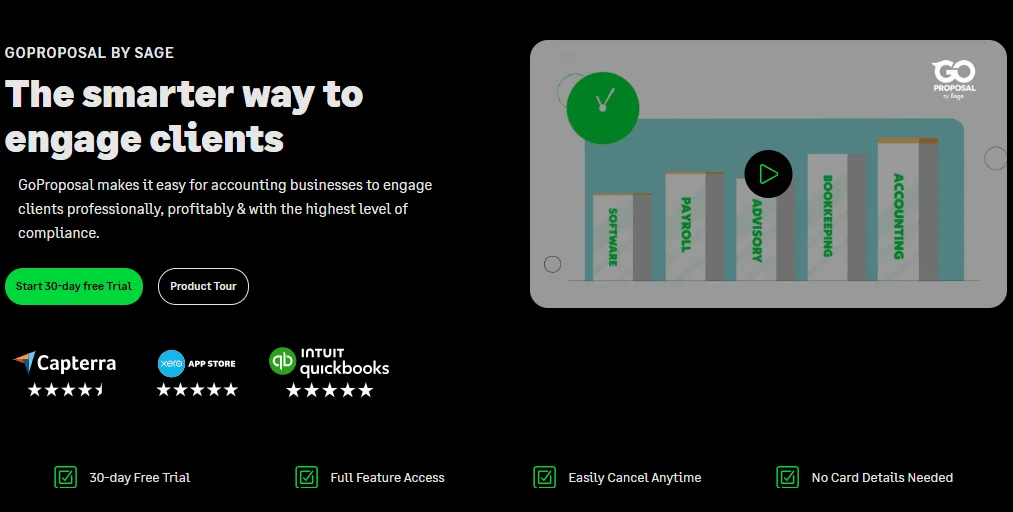
Among every proposal software for accountants option on this list, GoProposal stands out for one specific reason: pricing confidence. If you’ve ever pulled a number out of thin air when quoting a new client, this tool exists to fix that. GoProposal software for accountants uses a Pricing Wizard built on benchmark data from over a thousand firms, guiding you toward consistent, profitable fees instead of guesswork every single time.
Beyond pricing, GoProposal software for accountants includes automated engagement letter generation through its OverSuite add-on, which keeps your letters compliant as regulations change, plus built-in AML and KYC compliance tools that handle client risk checks behind the scenes.
It integrates directly with Xero and QuickBooks, and pricing starts around $75 a month for a single user on the Solo plan, scaling up to $255 a month for the Premium tier with unlimited proposals and multi-user collaboration. Many firms love the 30-day free trial, since it requires no credit card to test the full pricing engine.
Pros:
- Pricing Wizard built on data from 1,000+ firms
- Automated, compliance-updated engagement letters via OverSuite
- Built-in AML and KYC compliance tools
- Strong Xero and QuickBooks integrations
Cons:
- Compliant engagement letters often require a paid add-on
- Lacks native payment integration with processors like Stripe
- No onboarding automation beyond the proposal stage
GoProposal software for accountants is the clear pick if pricing consistency and compliance matter more to you than an all-in-one billing engine.
Ignition
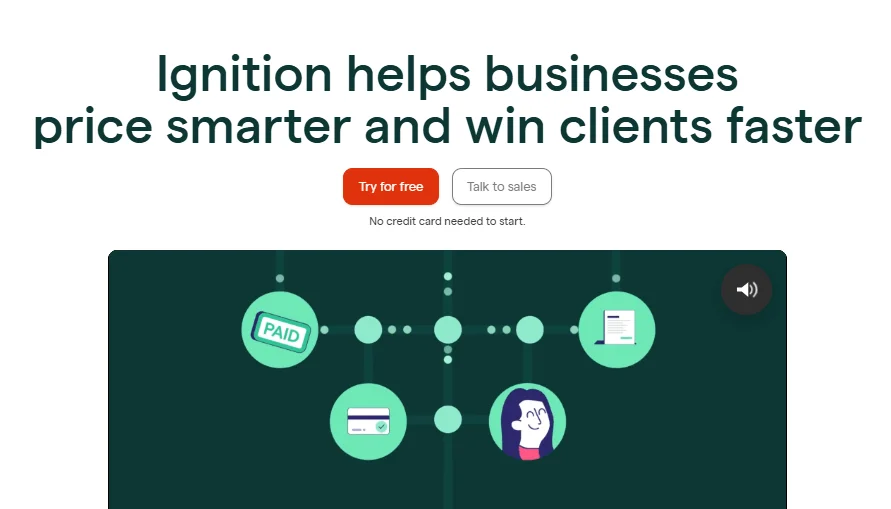
Ignition, formerly Practice Ignition, is one of the most established names in proposal software for accountants, and it’s a favorite among firms that already know what to charge and want to automate everything downstream. Clients can review services, sign the engagement letter, and connect their payment method in one seamless motion, which effectively eliminates accounts receivable for firms that use it well.
Ignition supports three-tiered pricing tables that let clients pick the option that suits them, along with smart upselling tools, real-time tracking of when a proposal is opened or signed, and deep integrations with QuickBooks and Xero that auto-generate invoices and sync payments. Pricing starts at $39 a month for the Solo plan with one user and 20 active clients, scaling to $399 a month for Pro+ with unlimited users, and there’s a 14-day free trial on every tier.
Pros:
- Combines signature and payment collection in one flow
- Three-tiered pricing tables built for accounting services
- Strong QuickBooks and Xero integration
- Bulk proposal creation for firms managing many renewals
Cons:
- Doesn’t offer pricing guidance the way GoProposal does
- No onboarding or client discovery tools
- Some users report slower payment processing times
Ignition earns its reputation as one of the most complete proposal software for accountants options for firms focused on automating billing and collections specifically.
Anchor
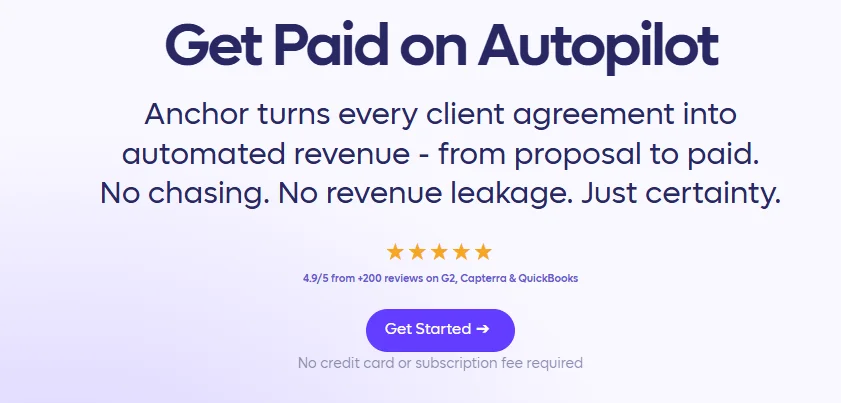
Anchor takes a genuinely different approach among proposal software for accountants by treating the entire client engagement, from proposal to payment, as one connected system. You build interactive proposals with pre-set services and pricing, and the moment a client signs, they connect their payment method right then, putting you in control of the entire billing and collections workflow without a single follow-up email.
What makes Anchor unique among proposal software for accountants is its pricing model. Instead of a monthly subscription, Anchor charges $5 every time you receive a payment, and every feature is available for free otherwise. That structure makes Anchor especially attractive for smaller firms or solo practitioners who don’t want another fixed monthly bill on top of everything else. It also offers real-time QuickBooks sync and auto-reconciliation, matching invoices to payments automatically so your books stay clean.
Pros:
- No monthly subscription fee, pay only per payment received
- End-to-end automation from proposal to reconciliation
- Real-time QuickBooks sync with auto-reconciliation
- Client portal for viewing proposals, agreements, and billing
Cons:
- Per-payment pricing can add up for high-volume firms
- Fewer design customization options than design-first competitors
- Newer platform with a smaller track record than Ignition
Anchor is a strong choice among proposal software for accountants for firms that want automation without committing to a fixed monthly fee.
Cone
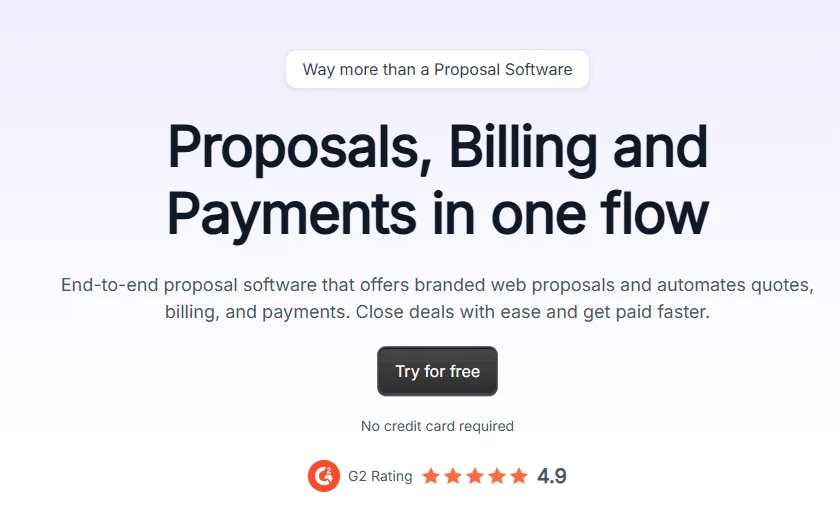
Cone is one of the more budget-conscious picks in proposal software for accountants, tying proposals, payments, and billing together in one centralized package. As soon as a client signs, Cone can automatically launch the related project and generate invoices, which removes a step most competing accounting proposal tools still leave manual.
Cone proposal software also includes a built-in, lightweight sales pipeline, one of the reasons Cone proposal software keeps showing up on budget-conscious shortlists, letting you track leads and follow-ups without needing a separate CRM bolted on. The client portal supports signing, paying, uploading files, and completing forms all in one secure location. Pricing is genuinely affordable compared to most of this list, starting at $12 a user per month on the Essentials plan, or $9 a month with annual billing, with unlimited clients and proposals included even at the entry tier.
Pros:
- Very affordable per-user pricing compared to competitors
- Post-signature automation launches projects and invoices instantly
- Built-in simple CRM-style pipeline
- Supports ACH and credit/debit card payments
Cons:
- No autosave, which risks losing work on a page reload
- Thinner documentation and onboarding guides than larger competitors
- Smaller feature set than more established accounting proposal tools
Cone proposal software makes sense for firms that want proposal-to-billing automation without paying enterprise prices for it.
PandaDoc
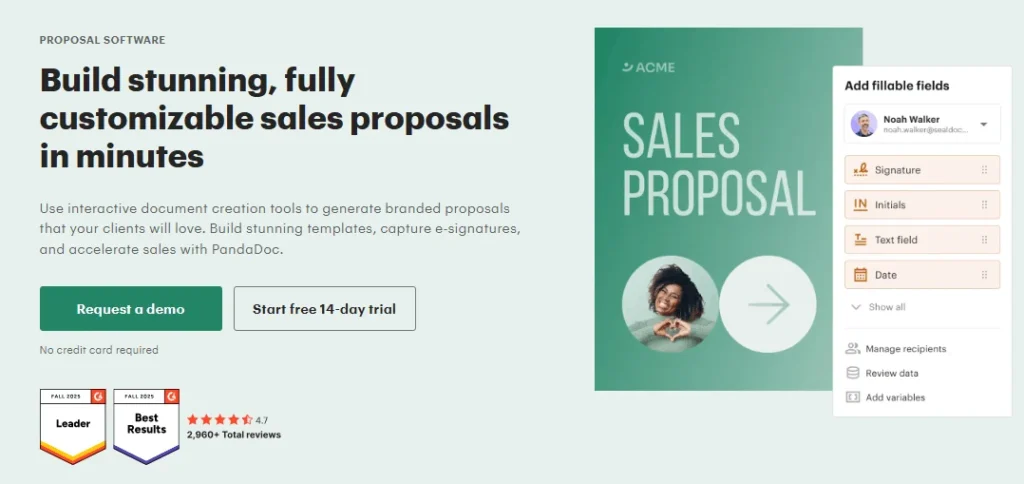
PandaDoc sits a bit outside the typical proposal software for accountants mold, since it’s a versatile, general-purpose document platform many accounting firms adopt because of its flexibility and strong CRM integrations. It’s particularly popular with firms that already run their sales process through HubSpot or Salesforce, since PandaDoc auto-fills proposals using existing CRM data rather than requiring manual entry every time.
Beyond CRM syncing, PandaDoc offers a library of more than 1,000 templates, real-time notifications the moment a proposal is opened or signed, and built-in e-signatures with a full audit trail. For firms handling healthcare-adjacent clients, PandaDoc’s HIPAA-compliant e-signature option is a genuine differentiator few competitors match. Pricing starts around $19 a user per month on the Starter plan, moving up to $49 a user per month for the Business tier with CRM integrations and custom branding included.
Pros:
- HIPAA-compliant e-signatures for healthcare-adjacent clients
- Strong CRM integrations (HubSpot, Salesforce, Zoho)
- Large template library with drag-and-drop editing
- Real-time document analytics and tracking
Cons:
- Not built specifically for accounting workflows
- Requires manual setup of pricing structures
- Mobile app lacks full editing capabilities
PandaDoc suits firms that want a flexible, general-purpose proposal platform rather than one built exclusively around accounting-specific pricing logic.
Proposify
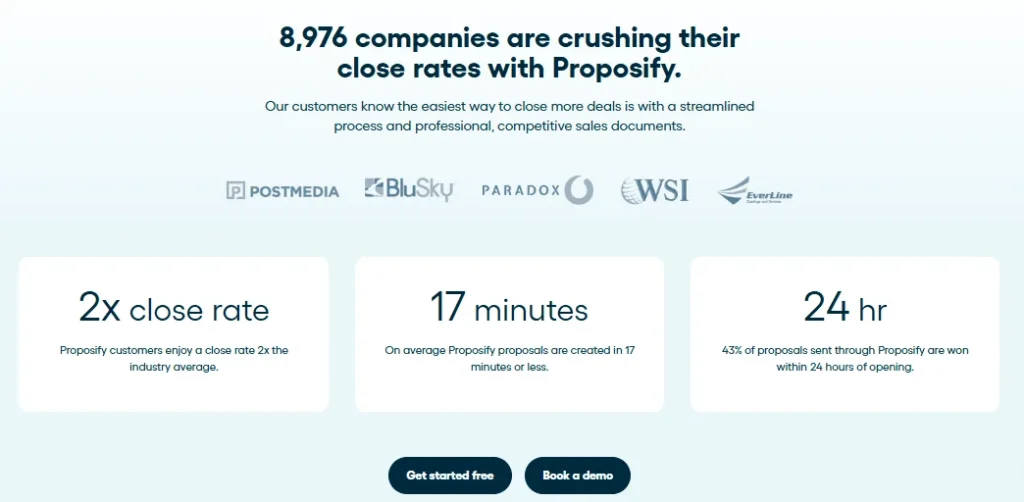
Proposify leans heavily into visual design among proposal software for accountants options, making it a strong fit for smaller firms or solo practitioners who want to punch above their weight without a dedicated designer on staff. The drag-and-drop editor and reusable content library, called Snippets, let you assemble polished, on-brand proposals quickly and consistently across your whole team.
Proposify also offers interactive pricing tables that let clients toggle add-ons and see the total update live, along with granular analytics that show exactly how long a client spent on each section of your proposal. Integrations with major CRMs like HubSpot and Salesforce round out the package. Pricing starts at $19 a user per month on the Basic plan, scaling to $65 a user per month for the Business tier with approval workflows and API access.
Pros:
- Strong visual design and extensive template library
- Reusable content library speeds up proposal assembly
- Detailed engagement analytics down to the section level
- Solid CRM integrations
Cons:
- Not accounting-specific, so pricing logic needs manual setup
- Higher-tier plans get pricey for larger teams
- Initial setup can take real time to configure properly
Proposify is worth considering among proposal software for accountants if presentation and brand consistency matter as much to you as automation.
Better Proposals
Better Proposals focuses on speed and simplicity within the proposal software for accountants space, letting you send clean, professional proposals without touching a line of code. It’s a drag-and-drop platform with over 250 customizable templates, and clients receive a web link rather than a static PDF, which noticeably speeds up how quickly they engage and respond.
Analytics are one of its strongest features, notifying you the instant a client opens your proposal and showing exactly how long they spent on each section. Better Proposals also supports embedded payment collection, letting clients sign and pay in a single transaction. Pricing starts at $19 a user per month on the Starter plan, moving to $49 a user per month on Enterprise, which adds content locking and manager approval workflows.
Pros:
- Fast, mobile-friendly, drag-and-drop template design
- Strong open and engagement tracking
- Embedded payment collection at signing
- Large template library
Cons:
- Lacks accounting-specific pricing guidance
- No integrations with major accounting platforms
- No option to export proposals to editable formats like Word
Better Proposals is a solid pick if you want simplicity and design polish over deep accounting-specific automation.
TaxDome
TaxDome positions itself less as a pure entry in the proposal software for accountants category and more as an all-in-one practice management suite with proposal capabilities built in. Firms already running their entire workflow through TaxDome appreciate not having to jump between separate systems for client communication, task management, and proposals.
Clients can review, sign, and pay directly through TaxDome’s secure client portal from any device, and once a proposal is signed, the platform can convert the listed services directly into an invoice. That said, the proposal module itself is fairly basic compared to dedicated accounting proposal tools, with no built-in pricing guidance or upsell logic. TaxDome only offers annual billing, starting at $800 a year per user.
Pros:
- Combines proposals with full practice management and task automation
- Secure client portal supports signing, paying, and communication
- AI-powered reporting and time-and-billing tools included
Cons:
- Proposal module lacks pricing logic or fee guidance
- Annual-only billing, no monthly option
- Overkill if you only need proposal functionality
TaxDome makes sense if you want proposal software for accountants bundled inside a broader practice management platform rather than a standalone tool.
SmartPath (by SmartVault)
SmartPath is one of the few proposal software for accountants options built from the ground up specifically for CPAs, combining pricing intelligence, proposal generation, onboarding, and payment collection into one tool. Its standout feature is a “Magic Link” that lets clients self-serve through their own onboarding, picking tiered pricing options without an awkward sales conversation.
SmartPath recommends pricing using data pulled from more than a thousand firms, similar in spirit to GoProposal’s approach, but pairs it with a more complete onboarding flow and built-in engagement letter support. It integrates with SmartVault and QuickBooks, and it’s built primarily for U.S.-based firms with one to ten team members.
Pros:
- Data-backed pricing recommendations from 1,000+ firms
- Client-facing self-service intake and onboarding
- Built-in e-signature, payment, and engagement letter tools
Cons:
- Primarily built for U.S. firms
- Not a full practice management suite on its own
SmartPath is worth a close look if pricing confidence and a smoother onboarding experience are your top priorities.
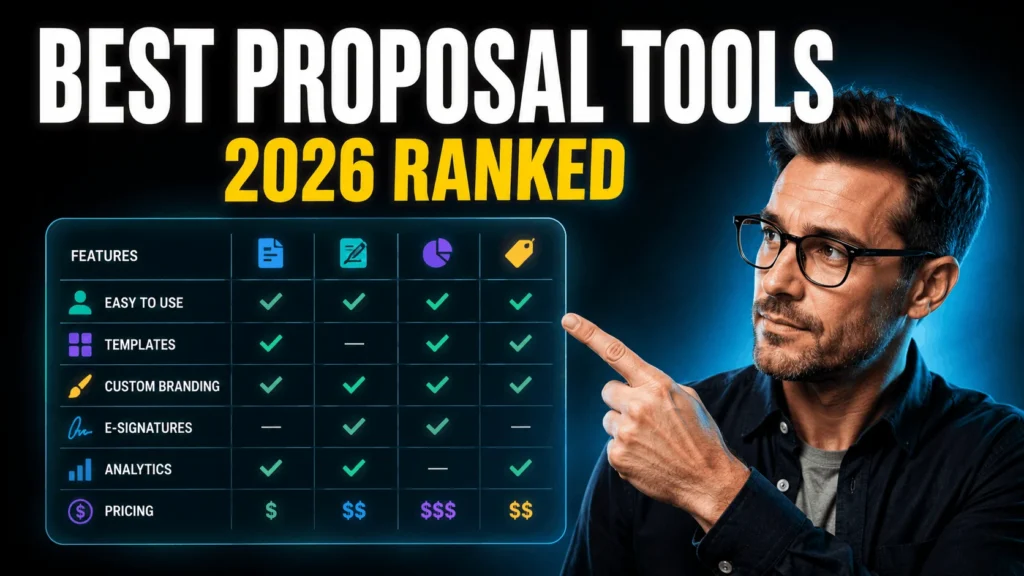
Comparing Proposal Software Solutions Side by Side
| Tool | Starting Price | Best For | Engagement Letter Automation |
|---|---|---|---|
| GoProposal | $75/month | Pricing confidence | Yes, via OverSuite add-on |
| Ignition | $39/month | Automated billing | Yes |
| Anchor | $5 per payment | No monthly fee | Limited |
| Cone | $9-$12/user/month | Budget-friendly automation | Basic |
| PandaDoc | $19/user/month | CRM-heavy sales teams | Yes |
| Proposify | $19/user/month | Visual design | No, general use |
| Better Proposals | $19/user/month | Simplicity | No, general use |
| TaxDome | $800/year/user | All-in-one practice management | Basic |
| SmartPath | Custom | Accounting-specific onboarding | Yes |
This table should make it easier to compare proposal software solutions without digging through ten separate pricing pages one at a time, whichever proposal software for accountants ends up on your shortlist.
Engagement Letter Automation: Why It Matters More Than You Think
A proposal you can’t legally execute is really just a quote, which is exactly why engagement letter automation deserves more attention than it usually gets. Regulations shift, and a static Word template you built two years ago might already be out of compliance without you realizing it.
Tools like GoProposal and SmartPath build engagement letter automation directly into the proposal flow, updating language automatically as rules change. Ignition and PandaDoc also support engagement letter automation, though the depth of compliance tracking varies. If your firm handles any regulated advisory work, engagement letter automation isn’t optional polish, it’s genuinely one of the most important features on this entire list.
Payment Integration: The Feature That Pays for Itself
Payment integration is where the real return on investment shows up. The old way, get a signature, create an invoice, send the invoice, wait, creates awkward gaps that stall your cash flow. Strong payment integration collapses all of that into a single step at signing.
Anchor and Ignition both build payment integration directly into the signing flow, meaning clients connect a card or bank account the moment they agree to your proposal. Cone and TaxDome offer similar payment integration through ACH and card processing. GoProposal software for accountants is a notable exception here, since it lacks native payment integration and typically requires pairing with a separate processor.
Practice Management Software for Accountants vs. Standalone Proposal Tools
It’s worth pausing on a decision a lot of firms wrestle with: do you want practice management software for accountants with a proposal feature bolted on, or a dedicated, standalone proposal tool? TaxDome and Canopy both lean toward the practice management software for accountants category, bundling proposals alongside task management, client portals, and billing.
Dedicated tools like Ignition, GoProposal, and Anchor generally win on proposal-specific depth, pricing logic, and engagement letter compliance. If you’re already committed to a single practice management software for accountants ecosystem and just need basic proposal capability, sticking with that built-in module avoids another login. But if proposals are a genuine bottleneck in your growth, a dedicated tool almost always outperforms the proposal module bolted onto broader practice management software for accountants.
Client Engagement Solutions: What Sets the Best Tools Apart
Beyond pricing and automation, the best client engagement solutions in this category share one thing in common, and it’s worth keeping in mind whenever you evaluate client engagement solutions generally: they replace a clunky, print-sign-scan process with something that feels like a modern checkout experience. Clients increasingly expect that kind of frictionless interaction, and firms that still rely on static PDFs are quietly sending the wrong first impression.
Qwilr and Fresh Proposals lean hardest into this idea, turning proposals into interactive web pages rather than documents, complete with embedded videos and adjustable pricing tables. Whichever client engagement solutions you choose, the goal stays the same: make it as easy as possible for a prospect to say yes.
Proposal Tools for Accounting: A Quick Category Breakdown
Not all proposal tools for accounting fall into the same bucket, and it helps to know the categories before you shortlist anything. Accounting-specific platforms like GoProposal and SmartPath build in pricing engines and engagement letter libraries designed around how firms actually bill. General-purpose proposal tools for accounting, like PandaDoc and Proposify, borrow from the broader sales world and focus more on design and CRM integration than accounting-specific logic.
There’s also a third category worth knowing: e-signature-first tools like DocuSign, which some firms pair with a static proposal template rather than buying a full platform. And for firms already inside an all-in-one suite, practice-management built-ins like TaxDome and Canopy fold proposal tools for accounting directly into the platform you’re already paying for. Matching the right category of proposal tools for accounting to your firm’s actual shape matters more than chasing the flashiest feature list.
Accounting Software for Professionals: Where Proposals Fit In
Proposal tools don’t exist in a vacuum, they’re one piece of the broader accounting software for professionals that a modern firm runs on. The best accounting software for professionals connects your proposal tool to your billing system and your CRM, so a signed engagement flows automatically into an invoice and a client record without anyone re-typing a single detail.
When you’re evaluating accounting software for professionals as a category, integration depth should weigh just as heavily as any single feature. A proposal tool that doesn’t talk to the rest of your accounting software for professionals creates exactly the kind of manual re-entry it was supposed to eliminate in the first place.
Getting Started With Proposal Software for Accountants
Buying the tool is the easy part. Getting your team to actually use it consistently is where most firms stall out. Here’s a simple rollout plan that works regardless of which proposal software for accountants you pick:
- Build your three most common templates first. Most firm proposals fall into a handful of patterns, tax prep, bookkeeping, and advisory being the usual suspects.
- Lock your pricing logic in early. This is the single biggest source of margin leak in manual proposals, so don’t skip it.
- Connect your integrations before launch. Wire the tool to your accounting software and CRM so the first signed client proves the whole flow actually works.
- Assign one owner. Someone needs to own the template library and pricing rules, or they’ll drift back into an inconsistent mess within a few months.
- Track your win rate and speed-to-send. If those numbers don’t improve within the first month, the templates likely need more work.
Done properly, most firms see proposals go from taking days to taking minutes within the first month of switching to real proposal software for accountants, regardless of which specific proposal software for accountants they end up choosing.
Frequently Asked Questions
What is the best proposal software for accountants? There’s no single best answer, since it depends on your firm’s billing model and existing tech stack. GoProposal and SmartPath lead on pricing guidance, Ignition and Anchor lead on payment automation, and PandaDoc or Proposify make sense if brand presentation matters more to you than accounting-specific logic.
How do accountants propose? Most accountants build a proposal using a template that outlines the scope of services, pricing tiers, and an engagement letter defining the terms. Modern proposal software for accountants lets clients review, sign, and often pay in one sitting, replacing the older print-sign-scan-email process most firms used for years.
What software do most accountants use for proposals? Ignition and GoProposal are among the most widely adopted accounting proposal tools in the US and UK markets respectively, though PandaDoc and Proposify also see heavy use among firms that prioritize CRM integration and design over accounting-specific pricing logic.
How much does proposal software for accountants typically cost? Pricing varies widely, from Anchor’s $5-per-payment model with no subscription fee, to Cone starting around $9-$12 a user monthly, up to GoProposal and TaxDome running $75 to $800 depending on billing frequency and features. Most tools offer a free trial, so it’s worth testing two or three before committing to an annual plan.
Do I need engagement letter automation if I already use a lawyer-reviewed template? It helps regardless. Regulations change, and engagement letter automation keeps your template current without you needing to manually track every regulatory update yourself. It also speeds up signing, since clients execute the engagement letter and proposal together instead of as two separate steps.
Can solo practitioners benefit from proposal software for accountants? Yes, often more than larger firms. A solo practitioner wears every hat in the business, and automating proposals and billing frees up hours that would otherwise go toward admin work instead of client work or growing the practice.
Final Thoughts
Choosing the right proposal software for accountants comes down to matching the tool to how your firm actually bills and operates. If pricing consistency is your biggest pain point, GoProposal or SmartPath will serve you well. If you want billing and collections fully automated, Ignition and Anchor are hard to beat. And if you’re looking for the most budget-friendly way to automate proposal-to-invoice without a big monthly commitment, Cone deserves a serious look.
Whichever proposal software for accountants you choose, the underlying goal stays the same: replace the slow, static process that loses you deals with something clients can review, sign, and pay in minutes. Every hour you save on proposals is an hour that goes back into billable work or actually growing your firm instead of chasing signatures.